Wednesday, 30 November 2016

Disabilities and reproductive rights: radical autonomy and assisted freedom

On the occasion of the International Day of Persons with Disabilities, we turn our attention to reproductive rights.

This is a highly contentious issue, highlighting some of the outdated attitudes that individuals, Governments, and institutions, including care facilities and medical professionals, still hold towards people with disabilities.

Sexuality education and disability: examples from Germany

On average, the hormonal injection only accounts for 1% of the contraceptives in use in Germany, which makes it relatively unpopular. Among women with disabilities, however, the hormonal injection is the most commonly used form of contraception. Unfortunately, this is not always down to a free and informed choice.
In 2008, for example, the case of a woman with an intellectual disability and severe diabetes came before the Higher Regional Court. She lived in a care facility, was sexually active and wished to have children. Her carer however, against her patient’s will, got a doctor involved who restrained the patient and dispensed the hormonal contraceptive injection. When the carer tried to have a follow-up shot dispensed later, the patient managed to reach out to a lawyer and brought her case to court – which ruled that yes, there was no legal basis for the forced use of contraceptives. Interestingly, it remains unclear if criminal charges were pressed – the carer certainly broke the law, so logically she should have been punished.

What may seem like an isolated incident is in fact very common. A 2012 study on the women’s livelihoods health and challenges of people with disabilities in Germany found that 18% of women with disabilities who live independently are sterilised. In care facilities, this figure rises to 30%, with only 53% of these procedures having been consented to. That’s staggering.
Far too many people view people with disabilities as asexual. As if being a sexual being and experiencing one’s sexuality is reserved for able minds and bodies only. In practice, this outdated perception is incredibly harmful. Only 1 in 2 people with intellectual disabilities in care facilities have access to sexual health education. This means that consent to the use of contraceptives is not necessarily informed or based on a comprehensive understanding of how they work.

Furthermore, this often places people with disabilities at a heightened risk of sexual assault and abuse, sadly even at the hands of their carers and doctors.

Disability, Development and sexuality: examples from Vietnam

Blue Dragon Children’s Foundation offers long-term shelter, educational opportunities and escape for Vietnamese children and young adults from their places of slavery. In October 2014, Blue Dragon dealt with “one of the worst cases of sexual exploitation of a vulnerable child we have seen and it shocked us all”. ‘T’, a fourteen year old deaf and intellectually impaired boy from Viet Nam, was savagely beaten and raped by his neighbour.

The Blue Dragon team was able to mobilise legal support, access treatment for ‘T’, gain representation in court, and secure care for the family to recover from their ordeal. The attacker was sentenced to 18 months imprisonment, which is very low by international standards. However, in Viet Nam this is a major achievement as current domestic law does not consider sexually assaulting a boy as a criminal offence.

Sexual assaults of people with disabilities seem to be a widespread problem in developing countries. A 2004 report by Save the Children Norway on sexual abuse and disabilities in Zimbabwe estimates that 87.4% of girls with disabilities have been sexually abused. Of those who had been sexually abused, 52.4% tested positive for HIV. In the developing world, laws, policies and prevailing attitudes do little to protect disabled people’s sexual and reproductive health and rights.

Human Rights and sexuality

The UN declaration on the rights of People with Disabilities takes one of the most radical approaches to disability and reproductive rights. Basically, it states that reproductive rights are a Human Right, including the right to marry and the right to be a parent. For people with disabilities, this means that access must be provided to be comprehensive, appropriate and judgment-free information about contraceptives, safe sex, sexuality and their bodies. In practice, educators, care facilities, medical professionals and social services are required to adjust sexual health education programmes and materials, and to tailor them to the needs and abilities of all people with disabilities.

Ultimately, what heated debates and controversies about sexuality and disabilities come down to are moral arguments about who has the right to be a parent. I’m sure we all know examples of bad parents, who lack much needed support and guidance – regardless of their abilities. Being a good parent is determined by compassion, love and care, not by intellectual and bodily capacities.

Global efforts need to be made at all levels to ensure that disabled people are able to lead a healthy life with regard to sexual and reproductive health. Protecting these rights, and spreading knowledge and information are key to tackling the current discrimination that people with disabilities face.

To learn more about sexual health, head over to http://theintimateinitiative.com/blog/.

Tuesday, 29 November 2016

Speech therapy in action

Communicating with other people is at the centre of our everyday lives. During my experience working in Cambodia and Viet Nam I met many people who have a communication or swallowing disorder. However, health services for them are nearly non-existent and many people are cut off from their families, friends and the rest of society,

In Cambodia, more than 600,000 people have a communication or swallowing disorder and there are very few places individuals can receive therapy. OIC are working to solve this silent crisis in Cambodia, the small team based in Phnom Penh work towards ensuring people receive the help they need to communicate with those around and lead full and happy lives.

OIC goal is to make speech therapy available to all those who need it in Cambodia. OIC is arguably one of the most sustainable organisations in the development sector, the team have a fourteen-year plan, including an exit strategy, after which OIC will leave Cambodia. The target is for 100 Cambodian speech therapists to be employed by the government by 2030.

Locally trained speech therapists are desperately needed, with no trained speech therapists in the country many children are left isolated or in some cases abandoned. In 2015 alone the social work at Angkor Hospital for Children responded to 20 cases of child abandonment.

Sorya who was born with cerebral palsy was abandoned at Angkor Hospital for Children when he was roughly nine months old. His family left the child due to their lack of confidence to care for him. According to the social work unit lead by, Mr. Sokchea, there are many factors that influence a family to leave their child in the care of another. Reasons include poverty, social norms, lack of information about support services available to the family, violence or the belief that a child born with disabilities will bring bad luck to the family.

Luckily the local team have worked tirelessly with a family who has fostered Sorya. The team have partnered with Safe Haven Medical Outreach, which provides ongoing physical therapy, play therapy and feeding training to Sorya and his foster family.

Speech therapy is so important not just for communication, speech therapy is extremely important and life-saving. When a child has a swallowing disability, common in those with cerebral palsy, food and liquid can go into their lungs. Consequently, they can contract pneumonia and even die.

Ensuring local communities, schools and families are educated means that children with communication or swallowing difficulties can be spotted quicker. Some teachers and parents usually assume their children are 'slow learners'. However with disabled workers heading out to communes and villages working with teachers, government officials and local non-governmental organisations more children will have access to the therapy they need.

Organisations such as Safe Haven Medical Outreach and OIC are working out in the field to ensure children have access to basic speech therapy. OIC go to many rural parts of Cambodia working with children with a range of disabilities ensuring they are able to communicate with their families, have access to education and are able to participate in the local community.

Without their campaigning efforts, advocacy and push for developing and training courses to create jobs for speech therapists many children such as Sorya would be left isolated. 

Please consider supporting OIC.


Sunday, 27 November 2016

Queer, black and disabled.


In a recent article published by the Huffington Post, a disabled woman wrote: “disability transcends race, ethnicity, religion, socioeconomic status, sexual orientation, and gender identity”. In other words, people with disabilities are a very diverse group of people.

Eddie Ndopu a 25-year-old black, queer-feminist, disability rights activist from Johannesburg is making history in a big way. He was raised by a single mother who fled apartheid South Africa to self-imposed exile in Namibia. At the age of two, Ndopu was diagnosed with spinal muscular atrophy and given until the age of five to survive.

Since then Ndopu has led an extraordinary life and career. He has held key positions such as Head of Amnesty International’s Youth Engagement Work for Africa, a summa cum laude graduate of Carleton University in Canada, where he served as a research analyst at the World Economic forum.
He is a champion of disability activism or as Ndopu puts it “ I’m the guy on wheels who refuses to rest until every single disabled person in the world until every single beautifully black and brown disabled soul gets a fighting chance at living their best life”.

In his video “In His Own Words” what strikes me about the video is how he challenges the audience to think about their understanding of disability. It’s one of the most inspiring videos I have watched. I hope you enjoy it.


Monday, 14 November 2016

What does a Trump administration mean for disabled people?

Nobody expected Donald Trump to win the election but now with Trump sitting in the Oval office what can disabled people expect? Like many other comments Trump has made during his election marginalized groups, including disabled people, will be watching carefully in 2017.

Although it is impossible to predict what the Trump administration will govern, his campaign platform and the Republican's priorities do not reassure disabled people and their families who rely on support from the Care Act and Medicaid. 

Disabled rights activists have voiced concerns throughout his election campaign, his threats to repeal Obamacare, block granting Medicaid, reducing ADA enforcement and police accountability are just a few concerns. 

Sadly, like many others, their voices have been pushed to the side and the American electorate has voted for an individual who publically mocked a reporter with the joint condition arthrogryposis. An election campaign which has been embodied by hateful messages, misogyny and discriminations will lead many people left with a sense of unease. Below are some of the points which disabled activists are most concerned about. 

Repealing Obamacare 

Throughout his campaign, Donald Trump has repeatedly promised to repeal the Affordable Care Act, also known as "Obamacare". The Republican party has full control of both houses of Congress, meaning Trump will easily be able to fulfil his campaign promise.

However, after his meeting with Mr.Obama on Thursday he has reconsidered his calls for an all-out replacement of the Care act. In a recent interview with the Wall Street Journal, he hints at a possible compromise to keep some aspects of the 2010 law.

In his first interview with since his election earlier this week with the Wall Street Journal, the president-elect said one priority was "moving quickly on President Barack Obama initiative, which Mr.Trump said has become so unworkable and expensive you can't use it".

Trump also comments how Mr.Obama has asked Mr. Trump to reconsider his stance during their first meeting at the White House after the election. Obama's consideration seems to be heard as Donald Trump has said he favours keeping at least two provisions.

President-elect Trump said he favours keeping the prohibition against insurers denying coverage because of patients' existing conditions, and a provision that allows parents to provide years of additional coverage for children on their insurance policies. Saying "he likes those very much".

For now, it seems Trump has done a U-turn on repealing Obamacare altogether. However, the Republican party has never supported the Care act combined with his erratic and inconsistent policy decisions may lead to another rash decision.

Block-Granting Medicaid 

Another of Trump's election campaign promises was to ''block- grant" Medicaid or flat annual funding amount. On Trump's website, he claims that nearly "every state already offers benefits beyond what is required in the current Medicaid structure". As part of the reforms, he pledges that governments can have  more autonomy over the administration of Medicaid. He claims that this gives the states more incentives "to seek out and eliminate fraud, waste and abuse to preserve our precious resources".

Currently, Medicaid functions as a flexible needes-based insurance program designed to provide health care to as many impoverished people as necessary. It is very unclear how Trump would structure his block-granting plan, his proposal was very unclear. The page entitled "Healthcare Reform to make America great again" claims the "American people have had to suffer under the incredible economic burden of the Affordable Care Act- Obamacare". The reforms rely heavily on free market principles that will restore economic freedom.

It is estimated that the proposed 'block-grant' could easily cause some 30 million Americans to lose health insurance, a significant amount of those who are people with disabilities. A healthcare system based on the principles of free the market will hit the most vulnerable. With many Americans falling further into poverty putting healthcare up for sale is not the answer to a more stable and healthy society.

Reducing ADA Enforcement and Police Accountability 

Disability activists have stressed concerned that the next administration could cut back on the civil rights division's resources or change its priorities. The president conducts a significant amount of disability policy through control of various regulatory agencies. The Department of Justice's (DOJ) civil rights division, for example, pursues complaints against employers, business, and other institutions for violating the Americans with Disabilities Act, the 1990 barring discrimination against Americans with disabilities.

Many organisations are sceptical Trump's political appointees to agencies like the Centers for Medicare and Medicaid Services and Department of Labor would be committed to ensuring access to benefits and suitable workplace accommodations for people with disabilities.

A Trump backed DOJ could also progress on police accountability to the detriment of people with disabilities - says David Perry, a leading writer on disability issues. As many as half of all people killed by police are disabled, according to Perry's original research for the Ruderman Family Foundation - including Eric Grabber, who suffered from asthma and heart disease. With the problematic situation of police shootings in the USA, the DOJ needs funding and an administration which will actively support their prosecutions. Therefore the DOJ's pursuit of police accountability is a disability rights issue as well.

Many activists will be waiting in anticipation for the appointee of the DOP who has yet to be named. However, if the current selection has anything to go by he will select a conservative individual who will unlikely maintain and fight for disabled peoples' rights.

Moving forward 

Protecting people with disabilities has traditionally been a cross-party cause in Congress. We hope this will be continued by both parties and the Republican party is able to keep Trump's regressive policies in check. In the words of Stephen W Thrasher " Hold tight to the ones you love who are sick and differently abled."


Monday, 31 October 2016

The singing activist

The World Health Organisation estimates that at least 81 million in Africa have some form of disability. In Nigeria alone it is estimated that 25.5 million people in Nigeria had at least one disability.

Grace Jerry is one of the 25.5 million people who have a disability. In 2002, Grace Jerry was on her way home from choir rehearsal when she was knocked down by a drunk driver and left with paralysis of the lower limbs. After the accident she says music took on a whole new dimension and now she uses music as part of her activism in Nigeria.

The Presidential Precinct Yali video blog, Grace or 'Gracie' eloquently speaks about her experience as a advocate for disability rights in a developing country.


Monday, 17 October 2016

Adaptive design - life made accessible through cardboard.

My last blog explored how to make disabled aides in developing countries. This week's blog will focus on a NGO based in New York who adapt cardboard to make aides for disabled people.

The Adaptive Design association first started out in 1981 when Alex Truesdell, an early childhood teacher from the Perkins School for the Blind in Boston, met Erin, an infant with severe multiple disabilities. A short time after Alex's Aunt Lynn lost the use of her fingers and thumbs following a spinal cord injury. With the help of her Uncle, Alex started to adapt different types of materials to customise solutions for Erin and her Aunt Lynn.

Over the next few years, Alex set up a small workshop in her basement and made many more adaptions for children at the school. Eventually the school hired Alex fulltime to start the Assistive Device Center, a program now in its 28th year.

Image courtesy of Kristen Hastings 

The mission of the Adaptive Design Association  (ADA) is to ensure that people with disabilities are able to fulfil their potential in all spheres of life. ADA help adapt materials for self-care, communication, social activities, academic and vocational potential. Each person receives their own custom adaption to suit their need. The organisation also runs a full range of hands-on education, from basic introduction to apprenticeships, for people wanting to establish Adaptive Design Center's within their schools, organisations and communities across the globe.


Kristen Hastings an occupational therapist from the USA who I met in Viet Nam when she volunteered at a rehabilitation centre I was working with, took the three day course with ADA. Kristen's motivation for embarking on the course was her experience volunteering at a rehabilitation centre in Hanoi, Viet Nam. Throughout her experience Kristen worked endlessly to adapt wheelchairs by using towels, thera-bands and other materials to correctly position each child. The course run in New York offered Kristen a chance to develop new skills when she works overseas in developing countries.

Image courtesy of Kristen Hastings 

The three day course includes the basics such as how to measure accurately, how to cut the cardboard using various power and hand-tools; to more complex tasks such as how to manipulate the cardboard. Kristen choose to learn how to make chair inserts as part of her final task on the last day. The chair inserts fit into a wheelchair which would position children in the most optimal position.

The course has enabled Kristen to develop sustainable solutions to rehabilitation and care in the developing world. Cardboard is a accessible material in many developing countries and with limited access to equipment designed for disabilities, engineering aides from cardboard is a lifeline for developing countries.

This simple idea of manipulating and adapting a low cost material allows more and more people with disabilities to access their world. Kristen Hastings commented 'positioning is key for so many who have a disability. With the proper supports, the body is free to focus more on eating, playing, writing etc. With increased accessibility to engage in your environment comes increased socialisation with others. With increased engagement and participation in one's environment comes increased quality of life."

By enabling a person to draw, play a musical instrument, wash their own hands or improve their communication skills to develop their potential. So often disabled peoples options are very limited due to a lack of accessibility.

Adaptive design provide great solutions for everyday uses. Although the organisation is located in New York they encourage individuals to spread the word and ideas. ADA hope to train other professionals, opening more workshops across the United States as well as other countries. By connecting more people across countries Adaptive Design is leading the way to creating greater accessibility for individuals in multiple communities across the globe.

Please consider supporting this NGO by donating.


Monday, 3 October 2016

How to make disabled aides in developing countries.


Working overseas in a developing country is always challenging whether you are haggling for resources to build a centre to stay on budget for a project or the car breaking down in the middle of nowhere - you have to learn to think on your feet.

Whilst working in Cambodia and Vietnam I spent a vast amount of time trying to find ways of making and adapting equipment which we would be able to find so easily in the developed world. Whether I was trying to fix wheelchairs, improve the level of care the children received or attempting to make toys to help with therapy sessions, everyday was a struggle.
During the month of October I'm going to share some of my ideas, solutions, books, websites and resources to help aid workers, families and therapists from across the world. This week I’m going to focus on making toys and sensory boxes for sensory therapy. 

Sensory bottles 

Pinterest has been my go to place for making sensory bottles for the last two years. Although it has been filled with endless experiments of making sensory bottles in a classroom in Cambodia, the office in Vietnam and many other places! I have finally found the winning solution.

What will you will need? 

Water bottle
Water
Glitter glue (or PVC glitter and glitter)
Glitter
Jewels/Sequins/Buttons etc 
Super glue


How to make it:

Fill the water water bottle up to roughly ⅔
Add a bottle of glitter glue and some extra glitter
Add the jewels,sequins, buttons etc
Finally superglue the top so it doesn’t go everywhere!


Sensory dens 

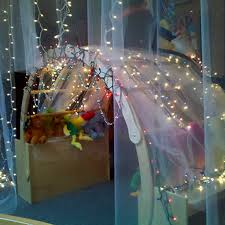
Ideally every centre will have a sensory room where the children can receive therapy or a place for them to relax. Sadly not every centre has enough space or resources to build a sensory room. In some centres we created ‘sensory dens’ which was a makeshift version! Here are some ideas which we used.

What will you need?

Material
Cardboard/paper
Fairy lights
Cushions
Paint/colouring pencils/felt tips
Art and crafts materials - glitter, sequins, material etc

How to make it: 

Drape the material to make a tent like shape.
Decorate the tent to the children’s need i.e including fairy lights, mobiles and sensory boxes to include for the session.


Sensory boxes

Each box can be designed to each child's or adult's need whether the box can be used to improve fine motor skills, autism or dementia there are lots of possibilities.

Autism Space sensory box:

You can adjust each box to the individual need whether you need a box based around a sense, learning tool each box can be changed!

What will you need?

Black beans or grey sand
Astronauts
Pebbles
Planets made from bouncy balls or cut out circles from cardboard
Stars (glow in the dark if you can source them)

How to make it:

Put it all in the box and create space!

Touchy feely dementia sensory box:

Boxes
Bowl of cold porridge
Ball of cotton wool
Sponge
Polystyrene balls
Banana
Football

How to make it:


With this box you can make a hole in each of the boxes, place the objects in the box and pass the box to the patient to put their hand in and try to guess what the objects are.


Fine motor skill box:

Four small boxes
Paint (green, yellow, red,blue)
Buttons (green, yellow, red,blue)

How to make it:


Paint the boxes the four colours and ask the individual to match the buttons to the box.
These boxes and bottles can be adapted for each person's need but they are cheap and easy to make. There are so many markets across the developing world where you can buy arts and craft materials and are so much fun to make. Enjoy!